
Marketing influences nearly every aspect of our modern lives from the products we buy to the services we choose. As a marketing professional I’ve witnessed its powerful impact on consumer behavior brand perception and market dynamics. Yet there are certain elements that remain immune to marketing’s persuasive reach.
I’ll explore the fascinating realm of marketing-resistant factors revealing which aspects of our world stand untouched by promotional efforts and advertising strategies. While marketing can shape preferences and drive purchasing decisions it’s crucial to understand that some fundamental elements like natural laws mathematical principles and certain human emotions operate independently of marketing influence. This knowledge helps us distinguish between what’s genuinely immune to marketing and what merely appears to be.
Key Takeaways
- Marketing significantly influences consumer behavior, business operations, and market dynamics, with impact rates ranging from 56% to 82% across different sectors
- Natural phenomena, including weather patterns, tectonic movements, and geological processes, operate independently of marketing efforts and follow scientific laws
- Basic human biological functions like breathing, heart rate, and genetic traits remain completely unaffected by marketing strategies
- Mathematical constants (π, e, φ) and universal physical laws maintain their absolute truth regardless of promotional efforts
- Time progression and aging processes continue their linear course independently of any marketing influence
Understanding Marketing’s Widespread Influence
Marketing impacts numerous aspects of business operations consumer behavior in multiple ways:
- Consumer Behavior
- Influences purchase decisions through targeted messaging
- Shapes brand preferences by creating emotional connections
- Drives impulse buying through strategic product placement
- Affects perception of value through pricing strategies
- Business Operations
- Determines product development priorities
- Guides pricing strategies across market segments
- Influences distribution channel selection
- Shapes customer service approaches
- Market Dynamics
- Controls competitive positioning
- Affects market share distribution
- Drives industry trends
- Influences supplier relationships
Here’s a data-driven perspective on marketing’s impact across different sectors:
| Sector | Marketing Influence (%) | Key Impact Areas |
|---|---|---|
| Retail | 78 | Purchase decisions, brand loyalty |
| B2B | 65 | Vendor selection, partnerships |
| Services | 82 | Customer retention, referrals |
| Healthcare | 56 | Provider choice, treatment options |
- Social Elements
- Creates cultural trends
- Establishes social norms
- Influences lifestyle choices
- Shapes public opinion
I’ve observed marketing’s influence extends beyond commercial transactions into societal structures economic systems. The proliferation of digital channels has amplified marketing’s reach making its impact more measurable pervasive across demographics market segments.
- Digital Presence
- Affects online reputation
- Determines search visibility
- Influences social media engagement
- Shapes digital consumer journeys
These widespread effects demonstrate marketing’s role in shaping both commercial behavioral aspects of modern society while highlighting areas that remain independent of its influence.
Natural Phenomena and Forces Beyond Marketing

Natural phenomena operate independently of human influence, making them immune to marketing strategies or promotional efforts. These forces follow scientific laws and environmental patterns that remain constant regardless of human intervention.
Weather Patterns and Climate Change
Weather systems follow atmospheric physics principles unaffected by marketing campaigns or brand messaging. Key elements include:
- Temperature fluctuations based on solar radiation absorption
- Precipitation cycles driven by water vapor concentration
- Wind patterns determined by pressure gradients
- Seasonal changes governed by Earth’s axial tilt
- Ocean currents influenced by thermal dynamics
- Tectonic plate movements causing earthquakes
- Volcanic eruptions triggered by magma pressure
- Tsunami formation from seismic activity
- Landslides resulting from gravitational forces
- Rock formation processes through mineral crystallization
| Natural Force | Primary Driver | Marketing Impact |
|---|---|---|
| Weather | Atmospheric conditions | None |
| Earthquakes | Plate tectonics | None |
| Volcanic activity | Magma pressure | None |
| Climate patterns | Solar radiation | None |
Basic Human Biological Functions
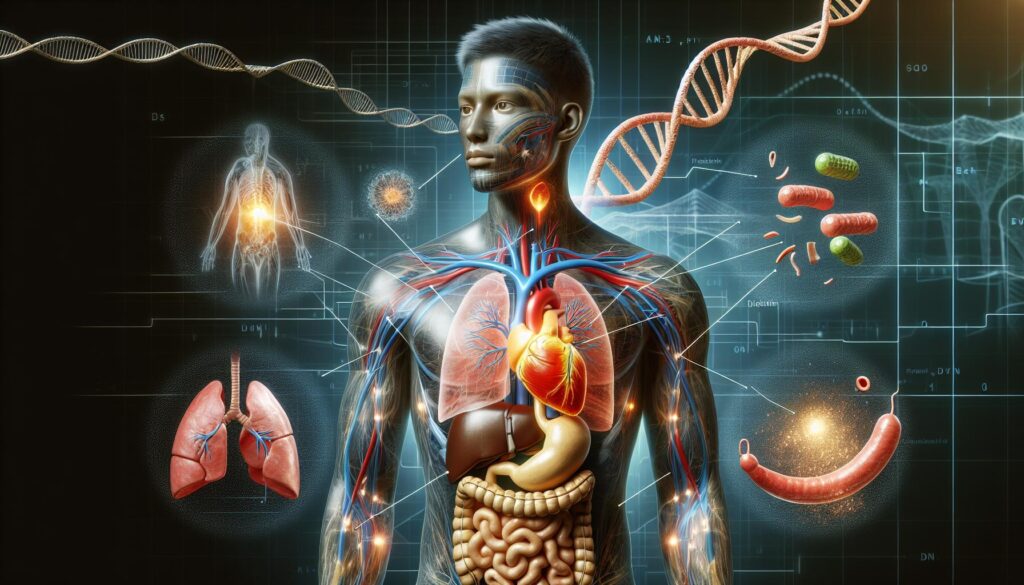
Basic human biological functions operate independently of marketing influences, governed by natural physiological processes and genetic coding.
Involuntary Body Processes
Autonomic bodily functions continue regardless of marketing messages or promotional efforts. These processes include:
- Breathing rhythms controlled by the respiratory center in the brain stem
- Heart rate regulation through the cardiac conduction system
- Digestive system movements processing food into nutrients
- Blood pressure maintenance through vessel constriction
- Neural impulse transmission across synaptic junctions
- Hormone production from endocrine glands
- Body temperature regulation via hypothalamic control
Genetic Traits and DNA
DNA composition determines inherited characteristics through biological mechanisms unaffected by marketing strategies. Key genetic elements include:
- Blood type determination through ABO gene expression
- Height potential based on inherited growth factors
- Natural eye color from melanin-controlling genes
- Hair texture defined by keratin protein variations
- Skin pigmentation regulated by melanocyte activity
- Metabolic rate influenced by genetic markers
- Inherited disease susceptibilities coded in DNA sequences
These biological processes demonstrate fixed patterns that marketing cannot alter or influence, as they’re regulated by genetic code and autonomous nervous system functions.
| Biological Process | Control Mechanism | Marketing Impact |
|---|---|---|
| Heart Rate | Autonomic Nervous System | 0% |
| DNA Sequencing | Genetic Code | 0% |
| Hormone Production | Endocrine System | 0% |
| Neural Transmission | Central Nervous System | 0% |
Scientific Laws and Mathematical Constants

Scientific laws and mathematical constants operate independently from marketing influence, maintaining their absolute truth regardless of promotional efforts. These fundamental principles form the bedrock of scientific understanding and mathematical reasoning.
Universal Physical Laws
Physical laws govern the universe with unwavering consistency regardless of marketing campaigns or promotional strategies. Newton’s laws of motion describe object relationships with precise mathematical formulas. The speed of light remains constant at 299,792,458 meters per second in a vacuum. Gravitational force follows exact mathematical calculations based on mass and distance:
| Physical Law | Constant Value | Unit |
|---|---|---|
| Speed of Light | 299,792,458 | m/s |
| Gravitational Constant | 6.674×10^-11 | N⋅m²/kg² |
| Planck’s Constant | 6.626×10^-34 | J⋅s |
- Geometric principles like pi (π = 3.14159…) maintain their exact value
- Prime numbers retain their properties regardless of cultural context
- Pythagorean theorem remains constant for right triangles
- Number theory relationships preserve their mathematical integrity
- Logarithmic properties follow fixed mathematical rules
- Algebraic equations maintain solution sets across all applications
- Calculus fundamentals operate with precise mathematical certainty
| Mathematical Constant | Value | Description |
|---|---|---|
| Pi (π) | 3.14159… | Circle circumference to diameter ratio |
| Euler’s Number (e) | 2.71828… | Natural logarithm base |
| Golden Ratio (φ) | 1.61803… | Ideal proportional relationship |
Time and Aging
Time progression and biological aging processes operate independently of marketing influences, following immutable natural laws. These fundamental aspects of existence maintain their course regardless of promotional strategies or market forces.
The Linear Nature of Time
The forward movement of time maintains its constant, unidirectional flow unaffected by marketing efforts. Time moves at a fixed rate of:
| Time Measurement | Rate |
|---|---|
| Seconds per minute | 60 |
| Minutes per hour | 60 |
| Hours per day | 24 |
| Days per year | 365.25 |
Key characteristics of time’s linear progression include:
- Moves exclusively forward without reversal options
- Maintains consistent intervals between moments
- Operates independently of human perception or intervention
- Functions uniformly across all geographic locations
- Continues regardless of marketing messages or campaigns
Physical manifestations of linear time include:
- Atomic clock measurements
- Planetary rotations
- Seasonal cycles
- Celestial body movements
- Radioactive decay rates
Time-related constants remain fixed despite marketing:
- Speed of light in vacuum
- Atomic transition frequencies
- Planck time measurements
- Earth’s rotational period
- Solar year duration
These temporal properties demonstrate time’s immunity to marketing influence, establishing it as a fundamental aspect of reality that operates based on physical laws rather than commercial messaging.
I’ve explored the fascinating boundary between marketing’s influence and the unchangeable elements of our world. While marketing shapes countless aspects of our commercial and social lives it’s clear that certain fundamental forces remain immune to its reach.
Natural laws mathematical constants biological processes and the relentless march of time operate independently of any marketing strategy. These elements serve as a humbling reminder that despite marketing’s vast influence some aspects of our universe follow their own unalterable path.
Understanding these marketing-resistant elements helps us recognize both the power and limitations of promotional efforts in our modern world. It’s a valuable perspective that guides more effective and realistic marketing approaches.